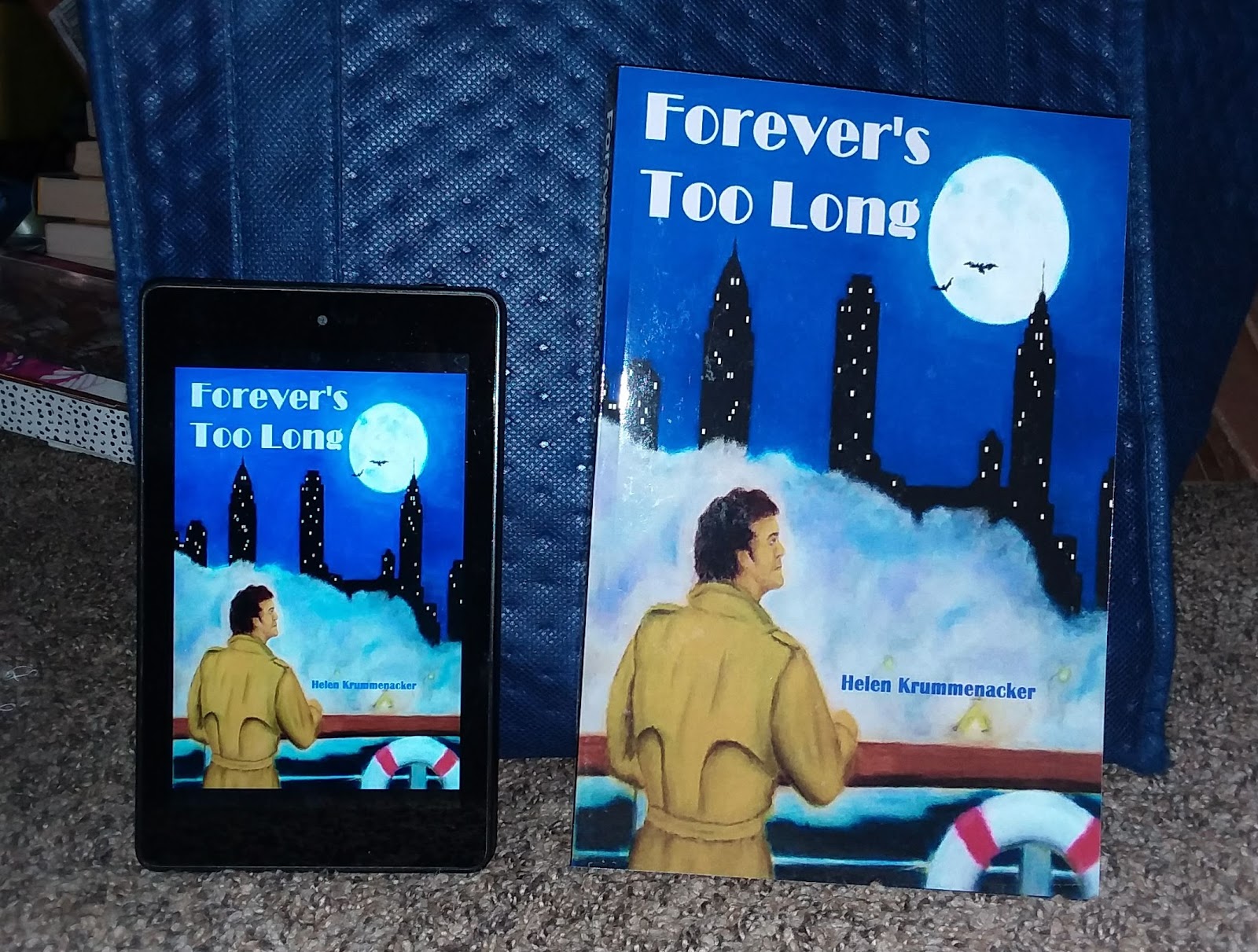
The first installment of “The Forever Detective” series is now available in Trade Paperback and E-Book formats
And the review are just starting to come in…
“Clever writing without being campy“
The first installment of “The Forever Detective” series is now available in Trade Paperback and E-Book formats
And the review are just starting to come in…
“Clever writing without being campy“
What a tense time. Will it sell? Will people review it? I know the book is good, but making a splash when there are so many forms of entertainment out there isn’t easy.
This is the part where the audience keeps the writer in suspense. But don’t worry, I’m good at waiting: in fact, I’ll start right now.
Can a book be film noir? Well, given that “film” is in the genre title, I’d say not.
But, there are many film noir movies that are based on books.The Maltese Falcon and The Big Sleep, for instance, came from novels by Dashiell Hammett and Raymond Chandler respectively. Thus, it may be useful to categorize a book style as film noir. There are many kinds of detective stories: police procedural, cozies, analytical, and forensic, to name a few approaches. Film noir gives you an idea of what to expect.
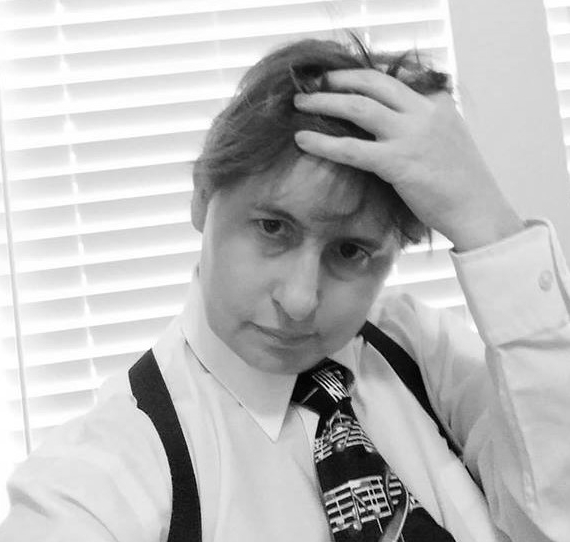
Some of the defining aspects of the film noir cinematic style are visual– tilted camera angles and dramatic lighting. That isn’t readily captured in a novel… but it helped me choose my author photo.
One of the absolute requirements of film noir is sexual tension. I’ve kept that in mind while writing these. Many characters are attractive and there are complications in their interactions with each other that keep it interesting. First person narration means that, although the protagonist is himself a very attractive man, the descriptions focus more on the female characters.
Of course, film noir also dwells on the darker side of social behavior. Usually, it has to do with crime. Not all film noir stories are mysteries. Some are capers; some are escapes; some are thrillers. But at heart, there’s generally a legal line being crossed or contemplated. Rafael has plenty of that to deal with, mostly from others, although he has to skirt the line himself in a few ways.
Finally, while this is not genre defining (film noir movies have been made since), the bulk of film noir movies were made from 1944-1954 in AMerica. Forever’s Too Long is set in 1947, in New York City, so describing it as film noir (or just noir), helps imply the setting.
Film noir movies have an air of fatalism, pessimism and menace, though, and… The Forever Detective moves in and out of that. Rafael faces a heavy menace. There are hints that he’s following a fate he knows nothing about, but others do. More will be explored about that in the sequels. As for pessimism, Rafael is torn between hope and fear. However, action helps him keep his focus emotionally and his warm personality and sense of humor contrast with the noir aspects.
So…. noir light? A dance/action number in shades of grey? Read it and decide.
So, one of the first things I often hear from people when they hear I have a book coming out is, “Who’s your publisher?”
There’s long been a stigma to self-publishing, and until recently, it was deserved. A writer had to buy a few thousand copies to get it printed at reasonable rates and generally did so as a pet project. Anyone who wanted to reach a wide audience and to possibly make money had to find a publisher who thought their work was high enough quality to invest in. It would go through rounds of editing before ever going to the shops. A real publisher meant the writer had talent. Self-publishing just meant they had money.
But.
That was then. This is now. Everyone knows there have been radical changes in how books are sold.There are many formats besides paper. Bookstore chains have collapsed or moved to online only. Publishing houses rise and fall, to the point where there are few one has heard of. But more has happened behind the scenes. Publishers tend not to invest in writers who aren’t celebrities. Instead, even authors who have turned a modest profit on multiple books are asked to shoulder the burden of “typesetting fees”. The manuscript is rarely put through an editing process. What most publishers look for is one thing: marketability. They are looking for a trendy subject, a sexy concept, and work that fits neatly into a hot genre or niche market.
Allan and I worked together on his first project to create something ended up combining thriller, paranormal investigation, police procedural,science fiction, horror, and strongly featured a lesbian couple. It didn’t fit neatly into a genre and as Allan researched the market and the experience of other writers, he realized how much things had changed.
With print on demand technology, works can be published with little more investment than the blood, sweat, and tears of the writer. Not relying on a publisher who doesn’t want to pay an editor to proofread the material, error checking is done by volunteers, and by several read-throughs by the author who is deeply committed to putting out a quality product. A publisher wants to sell a book and if the reader is dissatisfied, it means little. You’ll buy another author next time. The writer, on the other hand, has to deliver great work if they want readers to love their book and look for more by them.
In short, I don’t believe publishers care as much about quality as marketing at this point. And while anyone can self-publish a book these days, it’s not a warning sign that it was unpublishable by other means, because print-on-demand is great for giving an author more control, a greater profit share, and a way to reach a large audience, hence it is the first choice rather than last resort. Allan and I have chosen this route and advise others to do the same.
Interestingly, the publishing houses track print-on-demand sales. If an author makes themselves into hot property, then they may be offered a favorable contract that will help them get into more brick-and-mortar stores. Ultimately– the fate of writers is in the hands of the readers. Thank you for thinking of me!
These days, books as well as movies are often advertised with trailers that use images and sound to give you an idea of the flavor of the book, as well as sharing information about genre, storyline, and availability.
Allan Krummenacker was a huge help with this, doing the actual production based on music and images I chose, and a few finds of his own, but I especially like his vocal work– since the book is almost entirely first person narration, I decided to script the trailer that way, so he’s giving the voice of Rafael Jones.
*And remember the book will be available on June 1st, but you can still pre-order an e-copy at the following links:
Nook:
https://www.barnesandnoble.com/w/forevers-too-long-helen-krummenacker/1131555250?ean=2940163217083
Amazon:
https://www.amazon.com/dp/B07RSGKTDF
AmazonUK:
https://www.amazon.co.uk/dp/B07RSGKTDF
AmazonCA:
https://www.amazon.ca/dp/B07RSGKTDF
AmazonAU:
https://www.amazon.com.au/dp/B07RSGKTDF
Smashwords:
https://www.smashwords.com/books/view/938589
Also there will be signed trade paperback copies available upon request. Simply leave a comment in the section below, or e-mail me at:
helenkrummenacker@gmail.com